
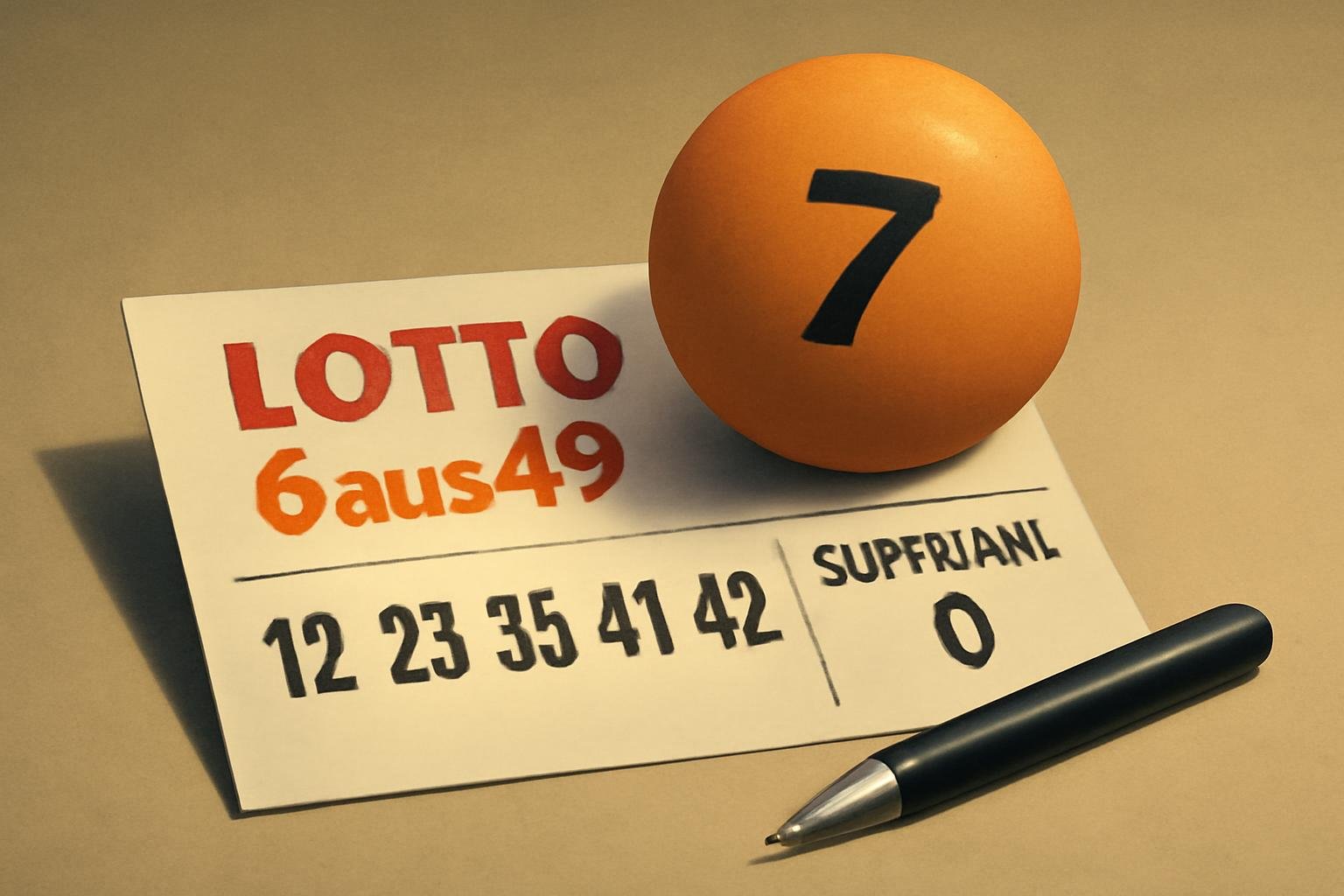
Lotto 6aus49 Generators and the Ticket Digit Called Superzahl
Germany's Lotto 6aus49 combines six selected main numbers with a feature that is easy to misdescribe as a seventh main ball: the Superzahl. Its role is separate from the main set, and its connection to the ticket number matters. A generator should explain that distinction rather than simply displaying seven unlabeled values.
A lotto 6aus49 number generator can demonstrate six different values from 1 to 49. If it also illustrates the Superzahl, it should identify a separate digit from 0 to 9 and explain that the official Superzahl is the final digit of the applicable ticket number. An invented digit on a utility page is not an issued ticket identifier.
The main selection is six distinct values
The six main values form an unordered set. Sorting them can make checking easier, but another ordering of the same members is the same main combination. A generator should produce a complete set inside the permitted range, with no main value repeated.
Check this structure before applying personal preferences. A favourite-number filter or a visually balanced layout does not repair an invalid count or an out-of-range value. If the tool offers several lottery presets, confirm the active six-from-49 field directly rather than assuming that all games with six selected values share the same upper limit.
Zero shows why the fields must stay separate
Zero is not a valid main value in the standard 1-to-49 field. It is, however, a possible Superzahl digit. A validation rule that treats every displayed value as belonging to the main field could wrongly reject a valid Superzahl illustration or accept the wrong type of value in the wrong place.
A useful hypothetical record might therefore include a clearly labelled Superzahl of zero alongside six valid main values. The point of the example is structural, not predictive. It demonstrates that the legality of a numeric label depends on its role, rather than on a global rule applied to an unlabeled list.
A generated digit is not a registered ticket number
The Superzahl is associated with the final digit of the relevant official ticket number. A generator that displays a sample digit should make clear that it is illustrating a possible selection component. It has not thereby issued a ticket or registered participation with the operator.
The authorized entry process determines the actual accepted ticket information. If a user can choose or adjust ticket-number details through a particular channel, that channel's current conditions govern the process. A separate utility cannot establish those facts merely by showing a plausible digit beside a six-number set.
Preserve the ticket relationship in saved examples
A record should retain the six main values separately from the Superzahl. If actual official ticket information is recorded, preserve its exact role rather than treating every digit as a player-selected main number. Optional products using ticket-number information also need their own labels and conditions.
This separation becomes useful when results are checked. Count main matches against the six main winning values, then check the drawn Superzahl condition where the prize category requires it. The matching task does not require sorting the Superzahl into the main row or replacing one of the original six selected values.
Review multiple examples at two levels
Two records can contain the same main set and different Superzahl digits. They describe different complete top-match conditions, although their main-set condition is shared. Reordering the main values alone does not create a new main set or a new complete condition.
A duplicate checker should therefore state whether it compares main sets or complete six-plus-digit records. Those are useful but different tasks. Keeping separate fields allows the reader to choose the appropriate comparison without losing information about the original output.
Judge number preferences honestly
A main set with consecutive values or repeated ending digits remains valid if it satisfies the format. A particular valid complete condition is not favoured in a fair draw because its Superzahl feels lucky or because a historical archive shows a recent imbalance among digits.
A useful hypothetical record can show main values 2, 9, 17, 28, 36 and 45 with a separately labelled Superzahl of zero. The purpose is to test field interpretation, not to recommend the line. When that record is saved, zero must remain an explicit digit rather than disappearing as though the field were blank. A reader should still see six selected main members and one separate ticket-related digit. That preserves the distinction between an absent value and a valid value whose label happens to be zero.
The generator's useful role is to produce readable, correctly structured examples and explain their limits. For Lotto 6aus49, that means six distinct main values and a separately understood Superzahl linked to ticket numbering. That explanation prevents more practical confusion than a decorative seventh box or an unsupported promise about future winning numbers.


